
The Real Internet Revolution
The stories we tell on the internet can liberate real people from real oppression.
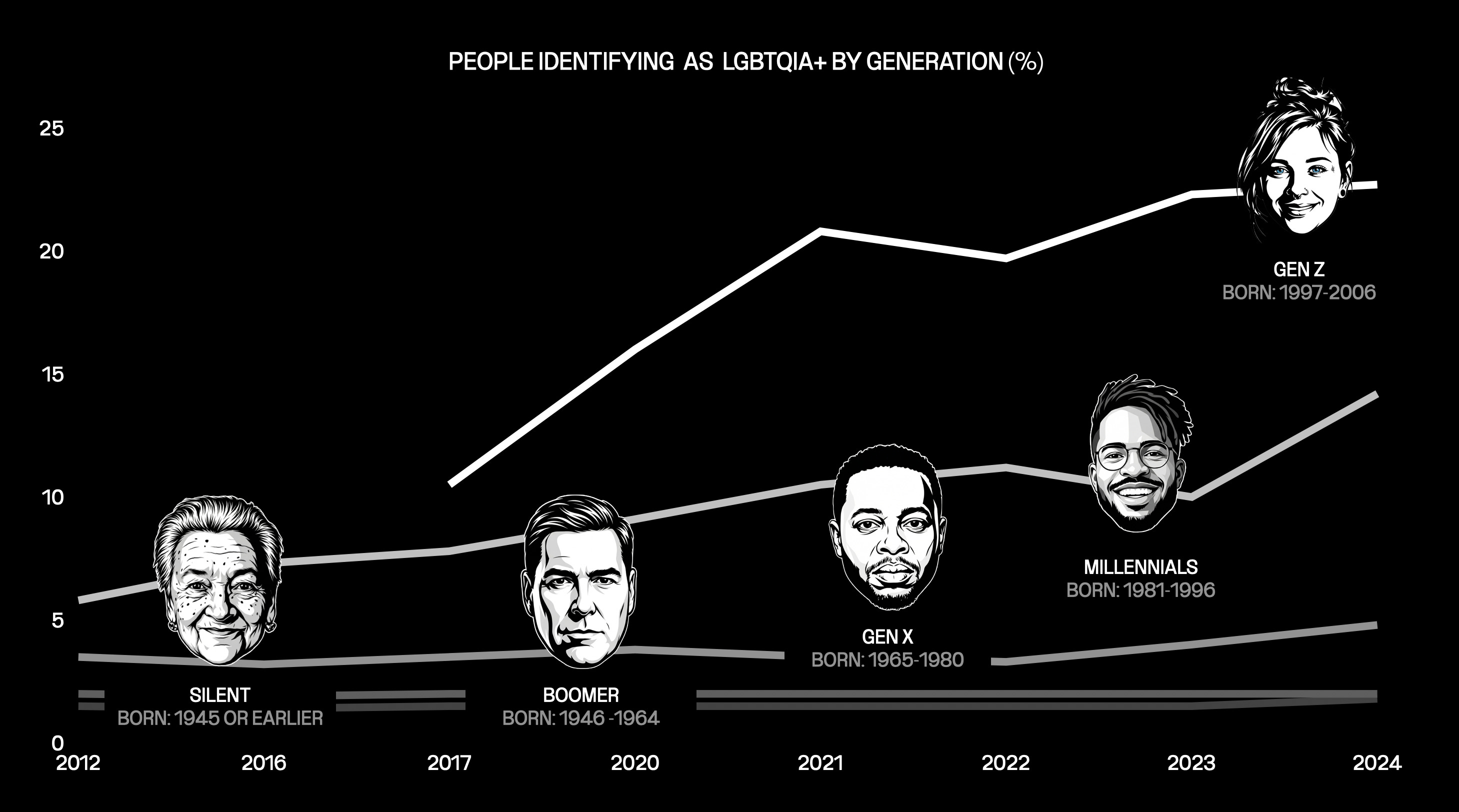
No kind of people is new. The only thing new is that those deemed different no longer have to hide; pretend; struggle to find resources about who they are and how to be who they are; or remain isolated from others who are like them or segregated from those who are not. The proliferation of stories and storytellers enabled by the internet has revealed the heterogeneous beauty and glory of all humanity by giving rise to countercommunities, countercultures, and counterstories galore.
One example of this, insufficiently discussed, is how 2SLGBTQIA+ people, many native to the internet and some even native to the smartphone, have empowered themselves using digital social storytelling to achieve unprecedented liberty, victories, and visibility.
This empowerment dates back at least as far as the early 1990s, when the United States government gradually opened the internet for public use. Here’s an early example, from a gay sixteen-year-old with the username JohnTeen O posting on America Online’s Gay and Lesbian Community Forum in 1994:
From: JohnTeen O. My high school career has been a sudden and drastic spell of turbulence and change. Once I was an automaton, obeying external, societal, and parental expectations like a dog, oblivious of who I was or what I wanted. I conformed to society’s paradigm, and I was rewarded. Yet I was miserable. Everything I did was a diversion from thinking about myself. Finally, last summer, my subconsciousness felt comfortable enough to be able to connect myself with who I really am, and I began to understand what it is to be gay.
The Gay and Lesbian Community Forum was a source of hope and guidance for gay and lesbian teenagers all over America a nightfire around which tens of thousands of adolescents gathered to tell their counterstories and support each other as they became more like themselves.
Our new age of hatred is a reaction to a revolution long unstoppable—a multicolored uprising of all the people standard stories typically oppress: Black people and people of color; people who are differently abled; feminists; geeks; Hindus; Indigenous peoples; Jewish people; Latin Americans; people who are lesbian, gay, bisexual, transgender, queer, agender, inter- sex, aromantic, asexual, polyamorous, ethically nonmonogamous, or kinky; Muslims; nerds; the neurodivergent; people who are pregnant or breastfeeding; sex workers; the unconventional; the young and the old; vegans and vegetarians; and anyone else who is not of European descent, straight, vanilla, white, and comfortable in and privileged by systems of patriarchy. The standard story calls all these disparate peoples “minorities,” but they add up to nearly everyone.
Tellers of counterstories always ask for more, look beyond, and seek an ever better world, and so they should: progress has no finish line. But that does not mean we cannot acknowledge how much has changed, how it changed, who changed it, and the bright rays of hope it shines on our futures.
From The Story of Stories: The Million-Year History of a Uniquely Human Art.